
Bone Marrow Aspirate Concentrate (BMAC) Injections
Advanced Orthobiologic Treatment for Select Orthopedic Conditions
What is BMAC?
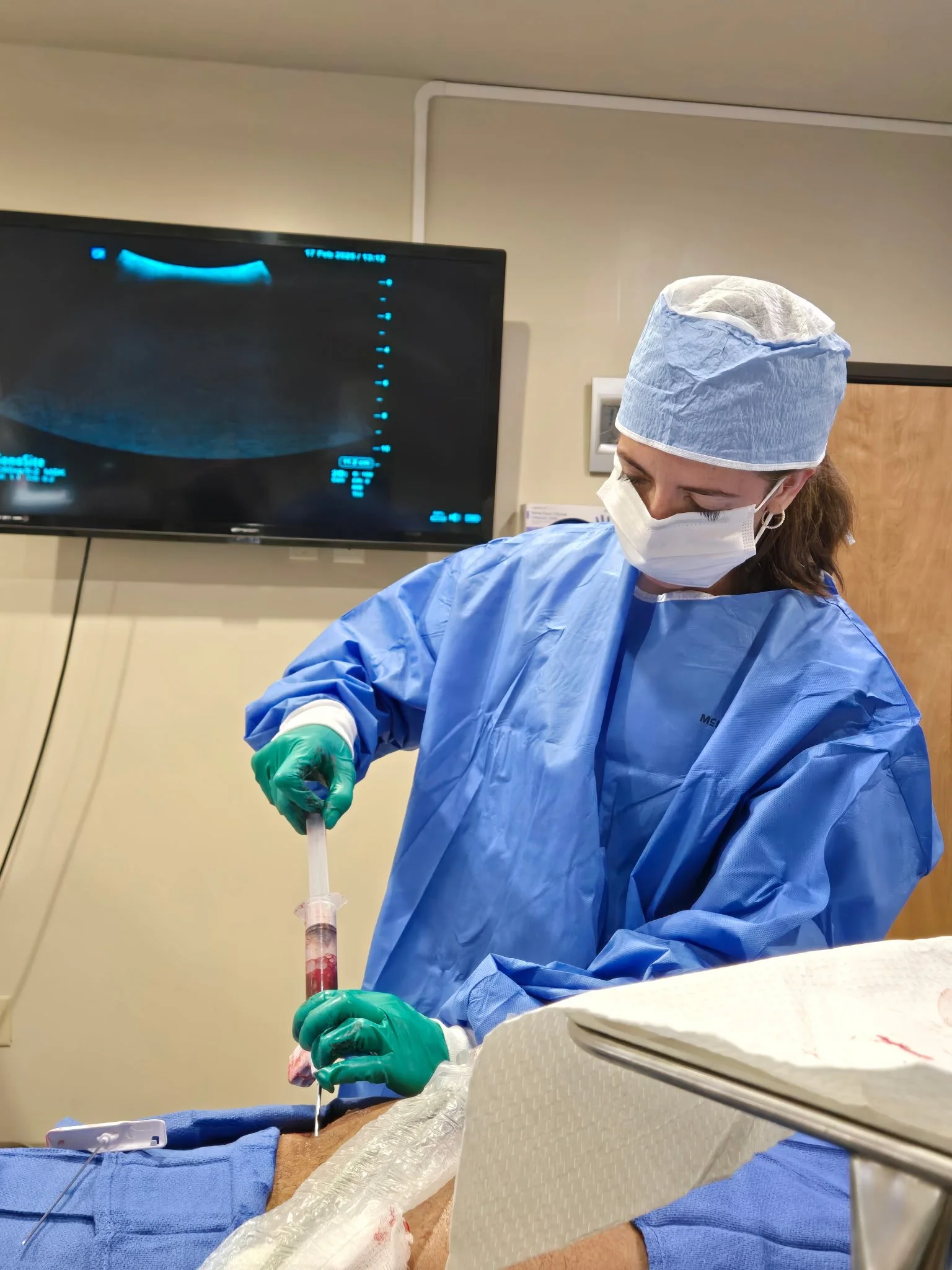
Bone Marrow Aspirate Concentrate (BMAC) is an orthobiologic treatment made by processing a patient's own bone marrow to concentrate platelets, growth factors, cells, and other bioactive signaling molecules that may support the body's natural healing response.
At IOSD, every BMAC procedure is personally performed by Dr. Melanie Worley using precision ultrasound and/or fluoroscopic guidance. Treatment recommendations are individualized based on your diagnosis, imaging findings, activity level, goals, and the latest available evidence.
What Are the Potential Benefits of BMAC?
Supports Natural Healing: BMAC contains concentrated cells, platelets, growth factors, and signaling molecules from your own bone marrow that may support the body's natural healing response.
May Reduce Pain & Improve Function: May improve pain and function in appropriately selected patients with osteoarthritis and select tendon, ligament, and cartilage injuries.
For More Advanced Conditions: BMAC may be considered for more advanced joint degeneration, larger tendon tears, cartilage injuries, or other conditions where a bone marrow-derived orthobiologic treatment may be appropriate.
A Non-Surgical Option for Joint Arthritis: BMAC may help improve pain and function in appropriately selected patients seeking to avoid or delay joint replacement.
Less Downtime Than Surgery: As a minimally invasive procedure, BMAC generally involves substantially less recovery time than joint replacement surgery.
Why Technique Matters
Bone Marrow Harvest
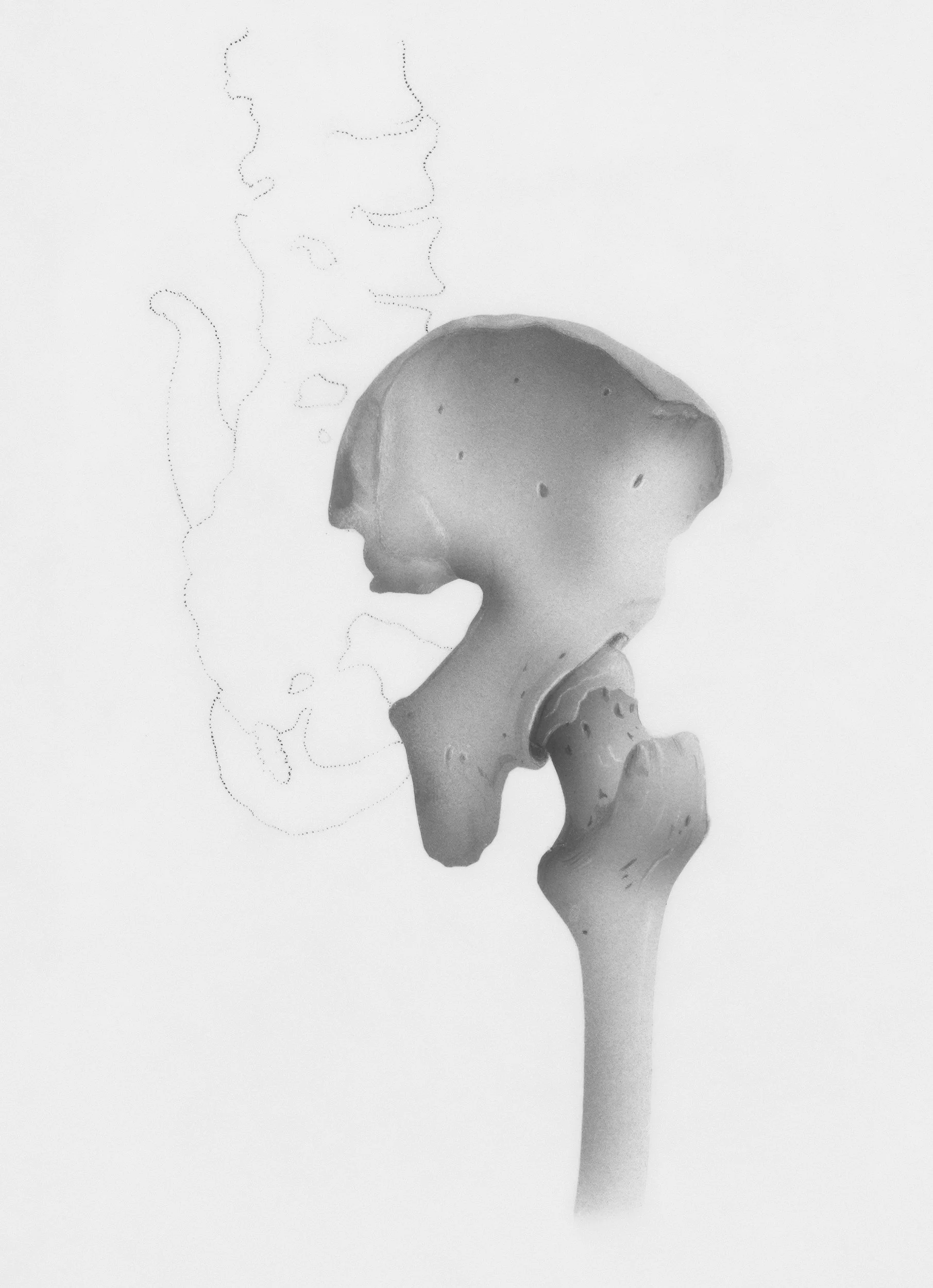
Bone marrow is typically aspirated from the posterior superior iliac spine (PSIS)—the back portion of the pelvic bone. The PSIS is widely recognized as a preferred harvest site because it provides excellent access to bone marrow while allowing the procedure to be performed safely and comfortably under image guidance.
Experience Makes a Difference
Not all bone marrow aspirations are performed the same way.
Research suggests that factors such as aspiration technique, needle repositioning, aspiration volume, and minimizing dilution with peripheral blood can influence the cellular composition of the final Bone Marrow Concentrate. Because of this, physician experience and meticulous technique play an important role in maximizing the quality of the biologic product.
At IOSD, every Bone Marrow Aspirate Concentrate (BMAC) procedure is performed by Dr. Melanie Worley using advanced aspiration techniques, careful processing protocols, and precision image guidance to optimize treatment delivery while prioritizing patient safety and comfort.
Evidence-Informed Care
BMAC continues to be one of the most actively studied orthobiologic treatments in orthopedic medicine. Dr. Philippe Hernigou and colleagues have published decades of research evaluating Bone Marrow Concentrate across a variety of musculoskeletal conditions, including knee osteoarthritis, shoulder pathology, hip disorders, osteonecrosis, and other orthopedic applications.
Their long-term studies have reported encouraging outcomes in appropriately selected patients, including improved pain and function and delayed progression to knee replacement in certain patient populations with knee osteoarthritis. While BMAC is not appropriate for every patient or every condition, this growing body of evidence supports its role as a non-surgical treatment option for carefully selected patients.
At IOSD, treatment recommendations are individualized based on your diagnosis, imaging findings, activity level, and goals. Our philosophy is simple: recommend the treatment that is most appropriate for you—whether that is BMAC, PRP, physical therapy, surgery, or another evidence-informed option.
Clinical Evidence
Bone Marrow Aspiration Technique & Cellular Yield
Hernigou et al. — International Orthopaedics, 2013
BMAC for Knee Osteoarthritis
Systematic review of randomized controlled trials — Han et al., 2024
Long-Term BMAC & Knee Arthroplasty Outcomes
15-year randomized study — Hernigou et al., International Orthopaedics, 2021
Medically reviewed by Melanie Worley, DO | September 2026
Fellowship-trained in Sports Medicine & Interventional Orthobiologics
Let's Find the Right Path Back to Motion.
Every injury—and every patient—is different. At IOSD, Dr. Melanie Worley takes the time to understand your diagnosis, imaging, activity level, and goals to build a treatment plan designed around you.